
RefuBees – The City as Nature Reserve for Pollinators
Interspecies action research in the build environment
Initiator(s)
Hans Kalliwoda, Blindpainters Foundation
Description
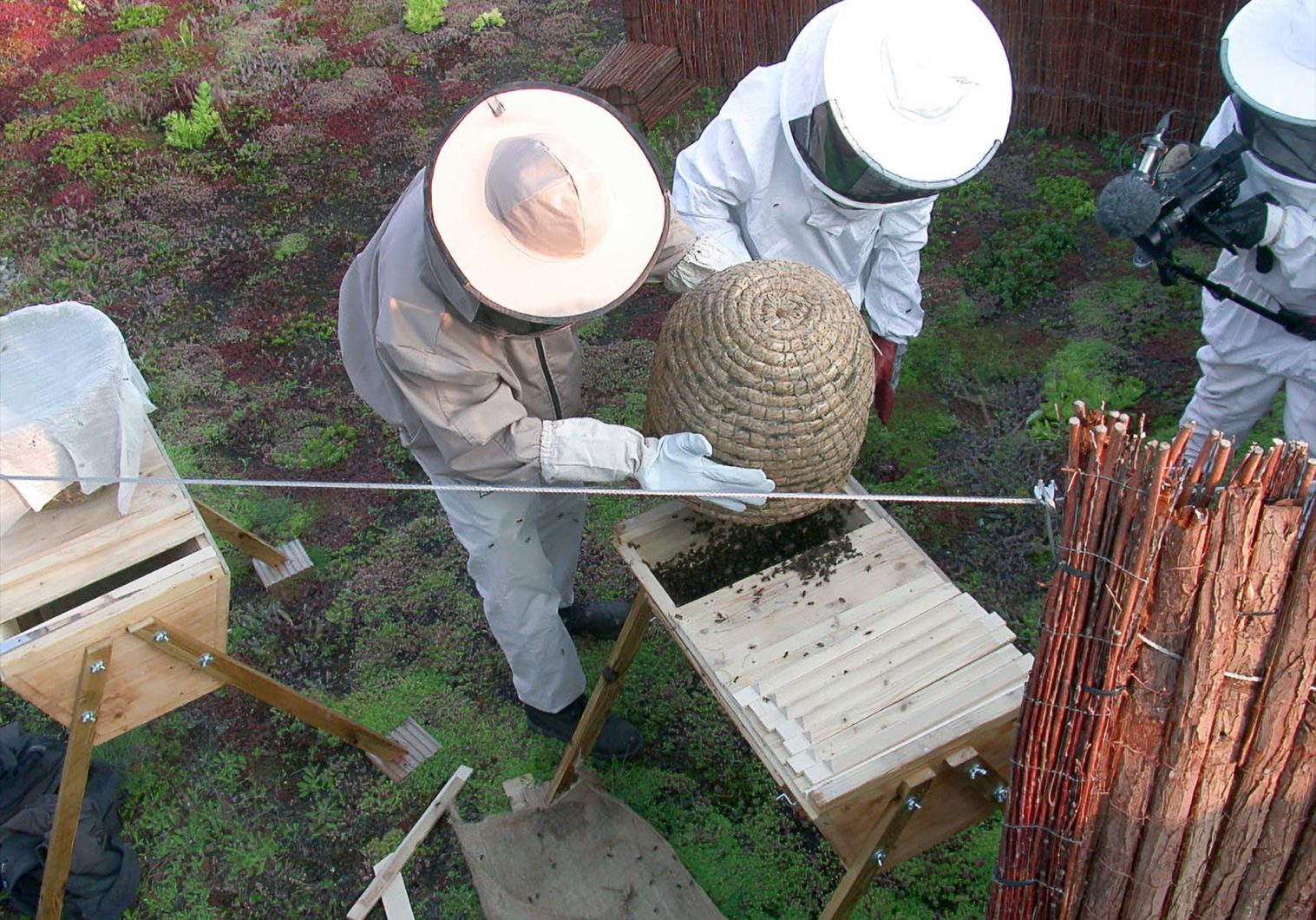
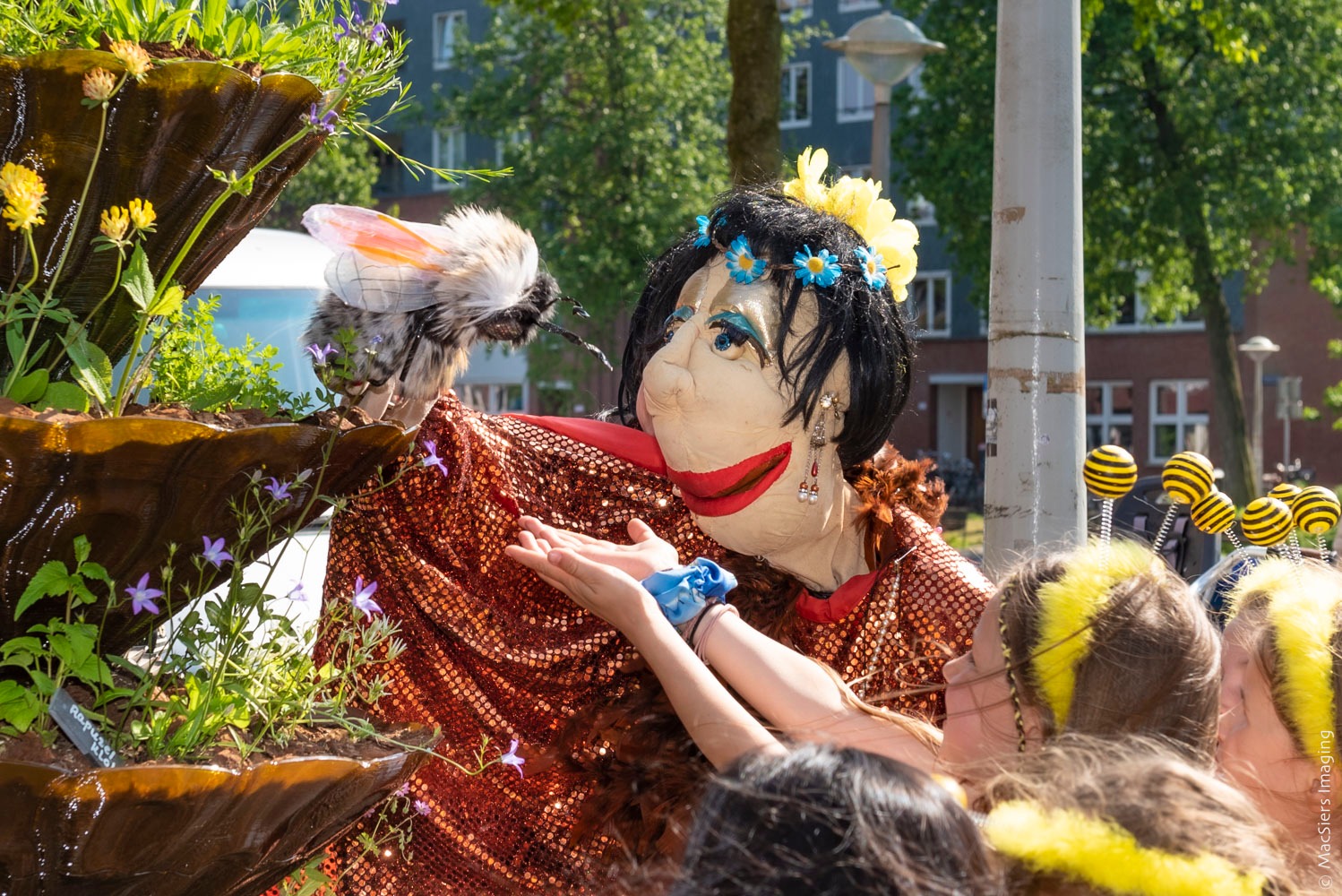
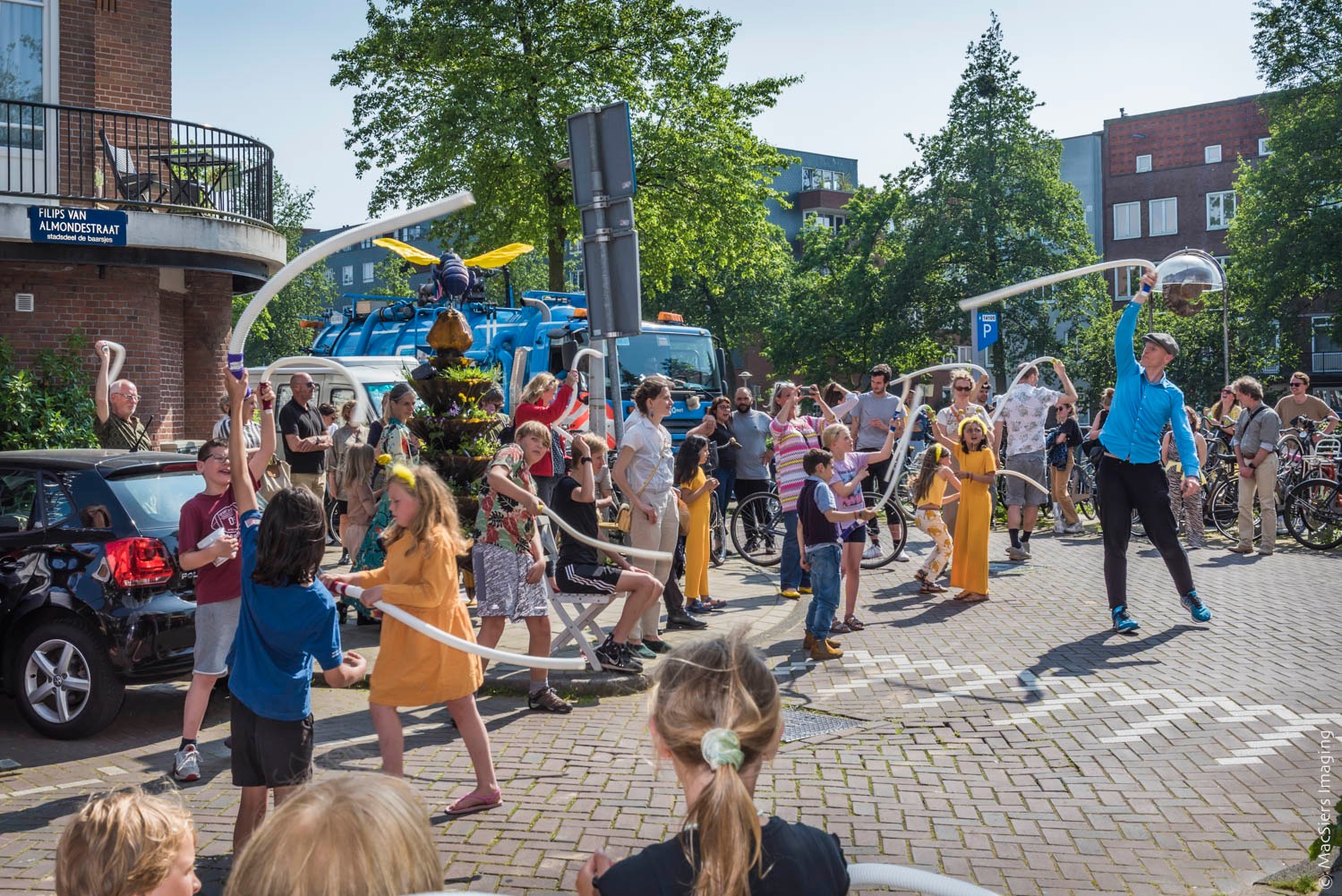
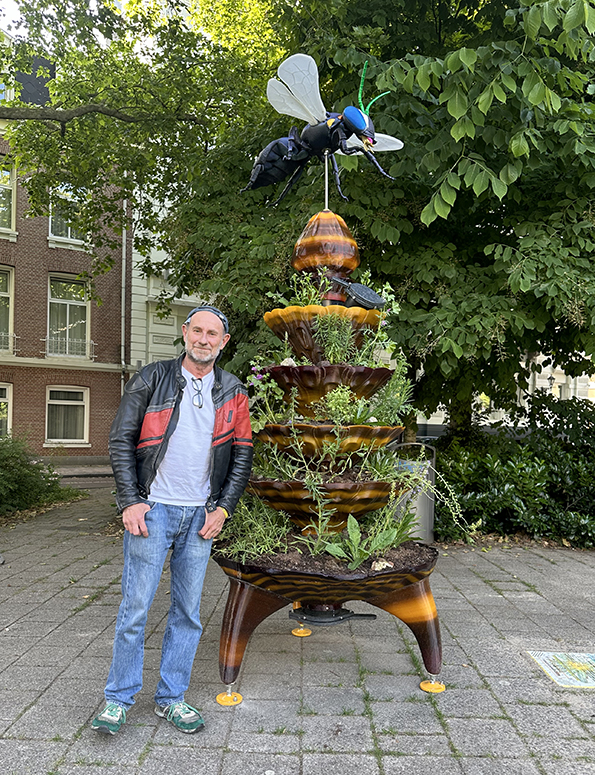
RefuBees (originating as BeeCare Amsterdam, 2011) is a long-term interdisciplinary art–science intervention that treats the city as a temporary Nature Reserve for wild pollinators. The project merges sociological practice, ecological research and contemporary art into public sculptures, participatory actions and neighbourhood-based action research. Its core motivation is the environmental imperative: the urgent need to mitigate the accelerating collapse of pollinators essential for planetary and human survival. Of the ~360 bee species in the Netherlands, about half are endangered. Solitary bees and bumblebees are quality pollinators, form the foundation of biodiversity, and their loss would destabilise entire food systems. Paradoxically, they now survive better in cities than in agricultural landscapes or even designated nature reserves due to long-term pesticide use, monoculture and habitat destruction. RefuBees addresses this collapse through tools that alter behaviour and perception. Central to the project are the BeeTotems: public, multispecies sculptures developed with the support of Naturalis Biodiversity Center, Haus der Natur in Salzburg, TU Darmstadt and circular-design innovators. They function as both ecological micro-habitats and thinking devices in the Buckminster Fuller sense “If you want to change how someone thinks, give them a tool that makes them think differently”, enabling residents to co-create microclimates where indigenous wild bees can persist, flourish and return. Wild bees are also not a homogeneous group. Each species has its own nesting material, pollen preference, flight period, flower structures, body size, soil conditions.
Context
There are 360 different species of bees in the Netherlands, half of them are on the list of being endangered and becoming extinct. There is one species of honeybee, the rest of the species are wild bees. Honey bees are quantity and wild bees (solitary bees and bumblebees) are quality pollinators and form the very basis of the biodiversity in the ecosystem. Nowadays, bees do better in inner cities than on the countryside. This is mainly due to toxicity in the water system through the use pesticide over the last 50 years, monoculture of crops grown that delivers food only in certain periods of the year and destruction of nesting opportunities. Between the beginning of the 90’s and 2018 we measured a decline of 75% of flying insects. The trend goes towards a greater loss, which will have grave consequences for biodiversity in the near future. The sculptures that are placed in public space are tools for local citizens to get hands-on engaged in creating Nature Reserves for pollinators.
Goals
To create awareness and agency around pollinator decline through accessible art–science tools; To establish urban micro-reserves that support wild bees until rural ecosystems regain ecological viability; To foster cultural and behavioural shifts in how residents inhabit and care for their environment;
To advance cross-media contemporary art integrating sculpture, ecology and social research; To create replicable models for biodiversity regeneration in cities worldwide.
Beneficial outcomes
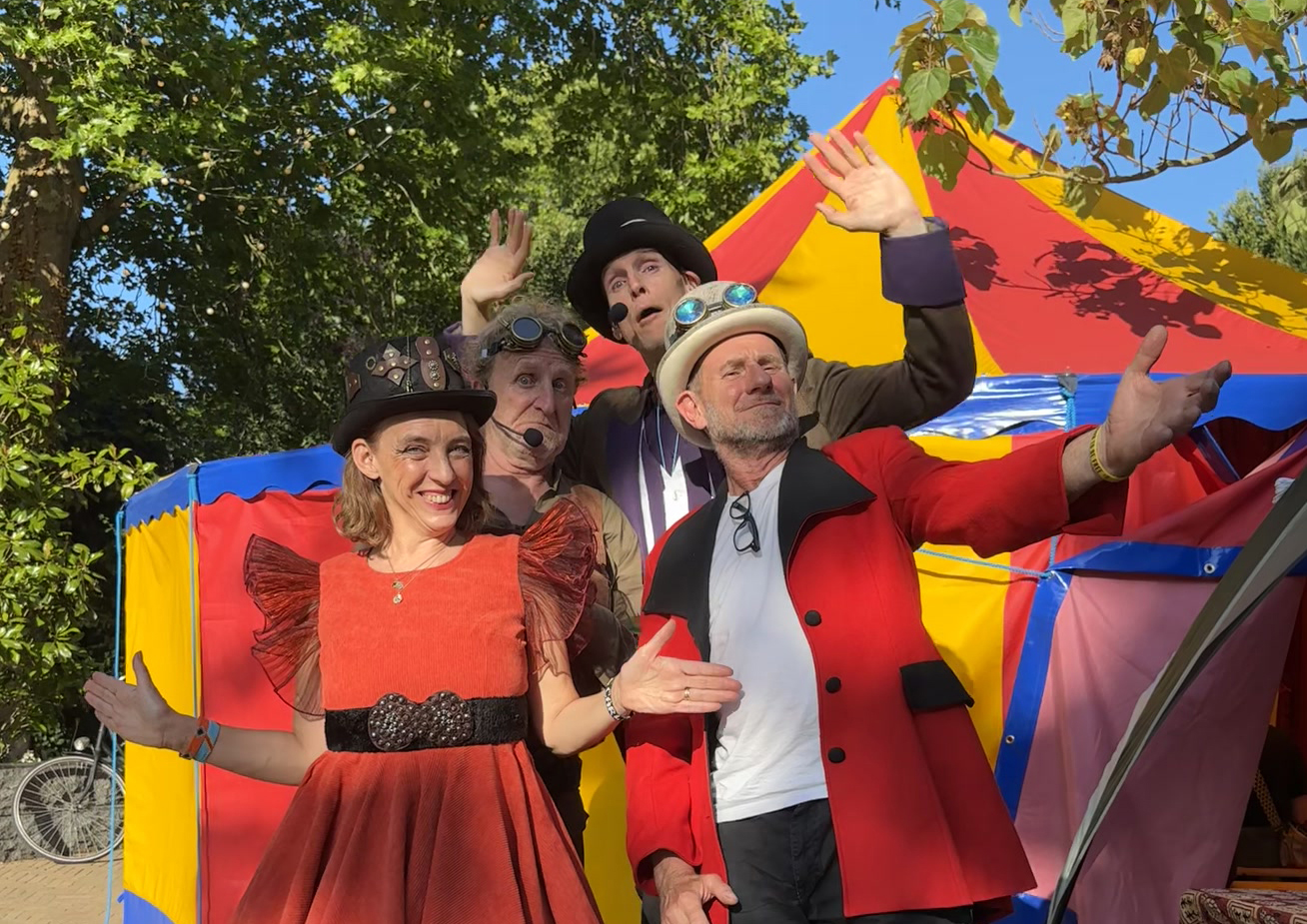
The project has deployed a diverse range of interventions, spanning public awareness, community engagement, and structural change. Theatrical door-to-door campaigns helped reduce fear and misinformation about bees and wasps, while the RefuBee adoption scheme enabled residents to support their local wild bees through curated plantings. Novel methodologies for monitoring the spread of wild bee species inspired regional policy development, and accessible formats such as the BeeCircus—a low-threshold performance for families combining acrobatics, dance and live music—brought the topic to wider audiences. These initiatives were accompanied by advocacy for changes in municipal mowing and maintenance practices, the distribution of high-quality nesting structures and BeeTotem-based micro-habitats, seasonal guerrilla planting and community-led gardening actions, and school programmes such as The Veggie Rocket.
Scientific partnerships generated ecological data, and public symposia addressed beekeeping, ecology and urban reserves, complemented in earlier years by annual Bee Film Festivals. Knowledge was further disseminated through lectures and keynote talks at local, national and international levels, innovation sessions on swarm intelligence in the Future Pollination Lab, and campaigns promoting pesticide-free alternatives in public green areas. Together, these interventions contributed to a distributed network of BeeTotems forming an urban pollinator infrastructure, supported by city-level planting catalogues and citizen engagement tools such as Plantbuddy, and offered replicable methodologies for cities seeking ecological resilience.
Location
The Netherlands, Germany
Users
General public, communities, educators, policymakers, idea-hunters and all who value biodiversity, ecological resilience and sustainable food systems, wild bees and the endless chain of dependent species
Maintained by
Blindpainters Foundation, in collaboration with local residents, scientific advisors and partner organisations. Supported in the Netherlands by: Rijkswaterstaat (Executive leg of the Dutch Ministry of Infrastructure and Environment)· Stichting Doen · Province of Noord-Holland · Prins Bernhard Cultuurfonds · Cities of Amsterdam & Leiden · GWL-terrain · BNG · De Alliantie · ABC Alliantie West · Groen en Doen · Fonds voor Oost · ANMEC · NMA · HB|3D BV · 3D Orbit · Veldtwerk. Supported in Germany/Austria by · City of Burghausen · Haus der Natur, Salzburg · TUMünchen · TUDarmstadt · Bund Naturschutz Bayern · ANL (Bayerische Akademie für Naturschutz und Landschaftspflege)
Duration
2011 - ongoing
Category
Scientific
Pedagogical
Politics
Urban Development
Economy
Environment
Social
Links
https://www.refubees.org
http://www.blindpainters.org/beecare
https://www.facebook.com/BeeTotems.nl


