
Plantas Nómadas / Nomadic Plants
A biorobotic living system that uses polluted water, plants, and bacteria to generate energy and help repair ecological damage in its surroundings.
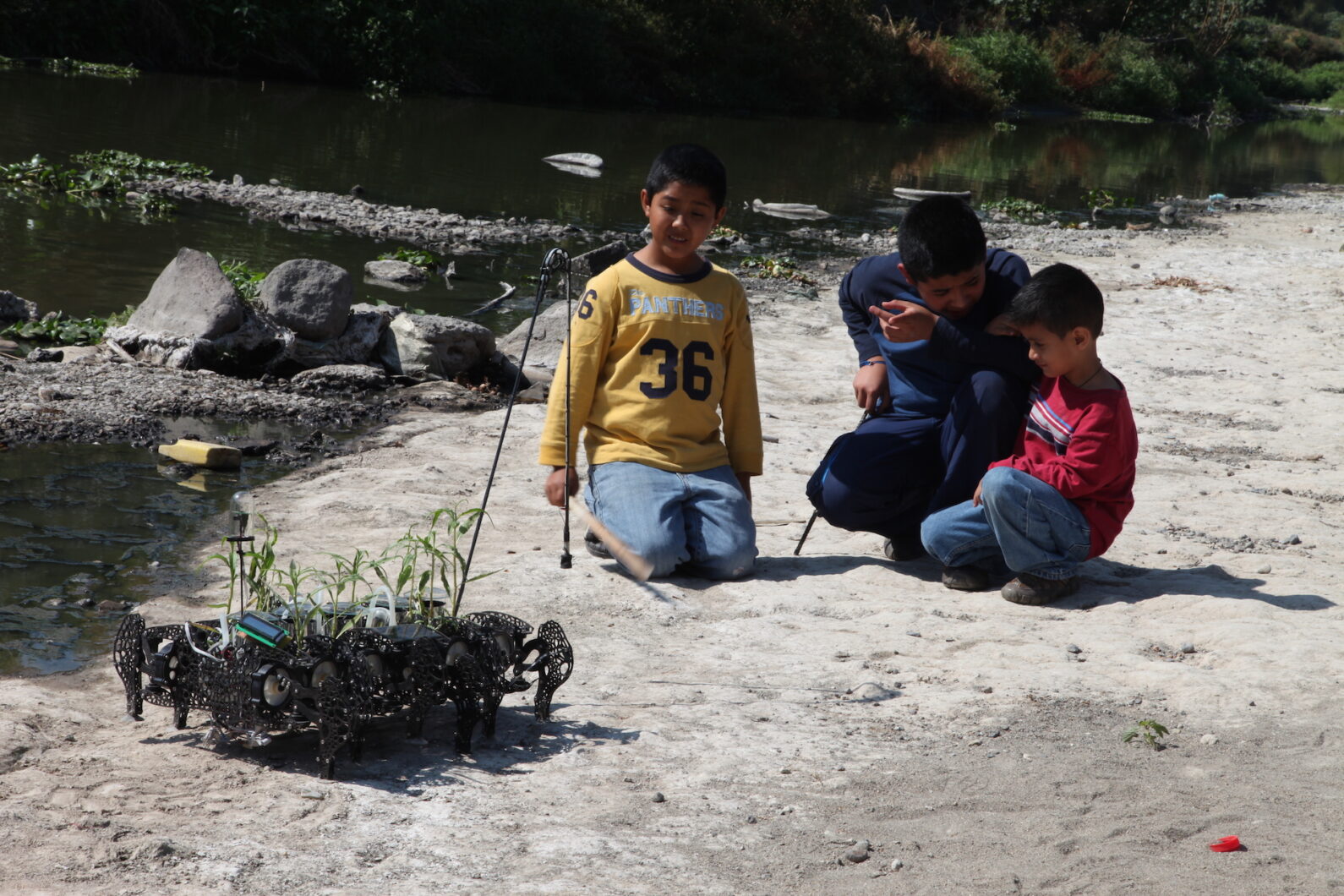 Planta Nómada, encuentro con la comunidad. Courtesy of the artist.
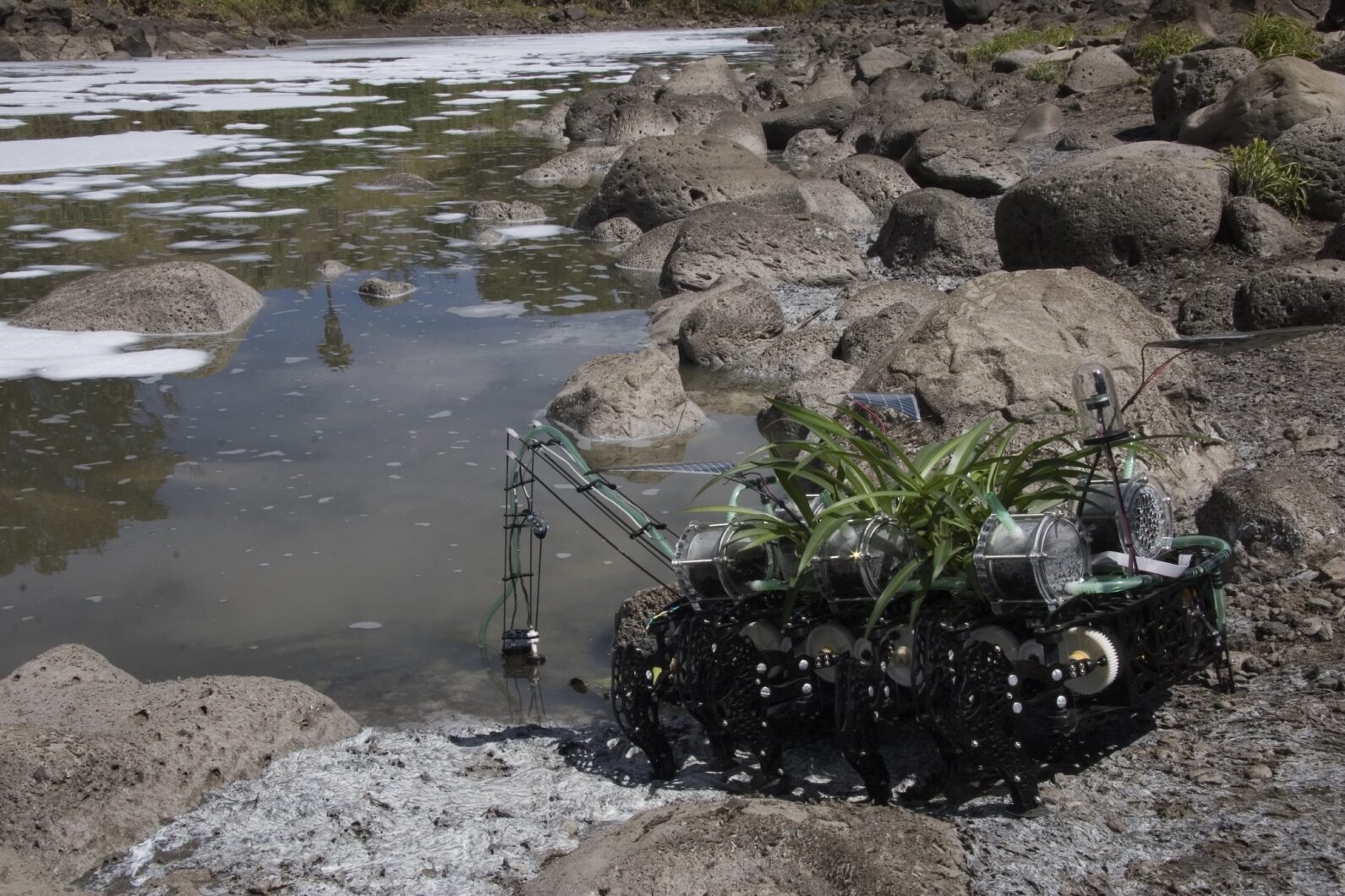 Río Lerma. Courtesy of the artist.
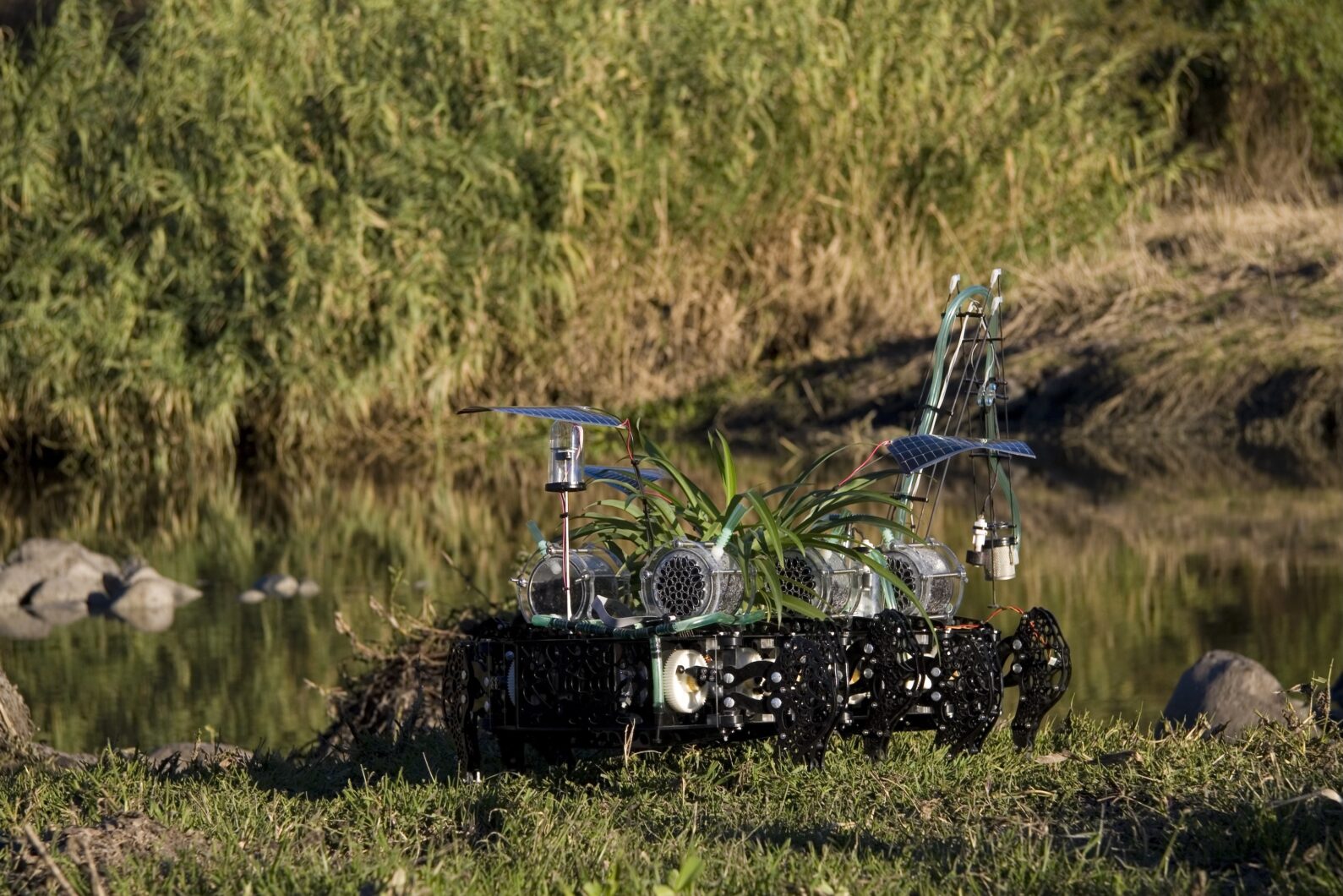 Río Santiago. Courtesy of the artist.
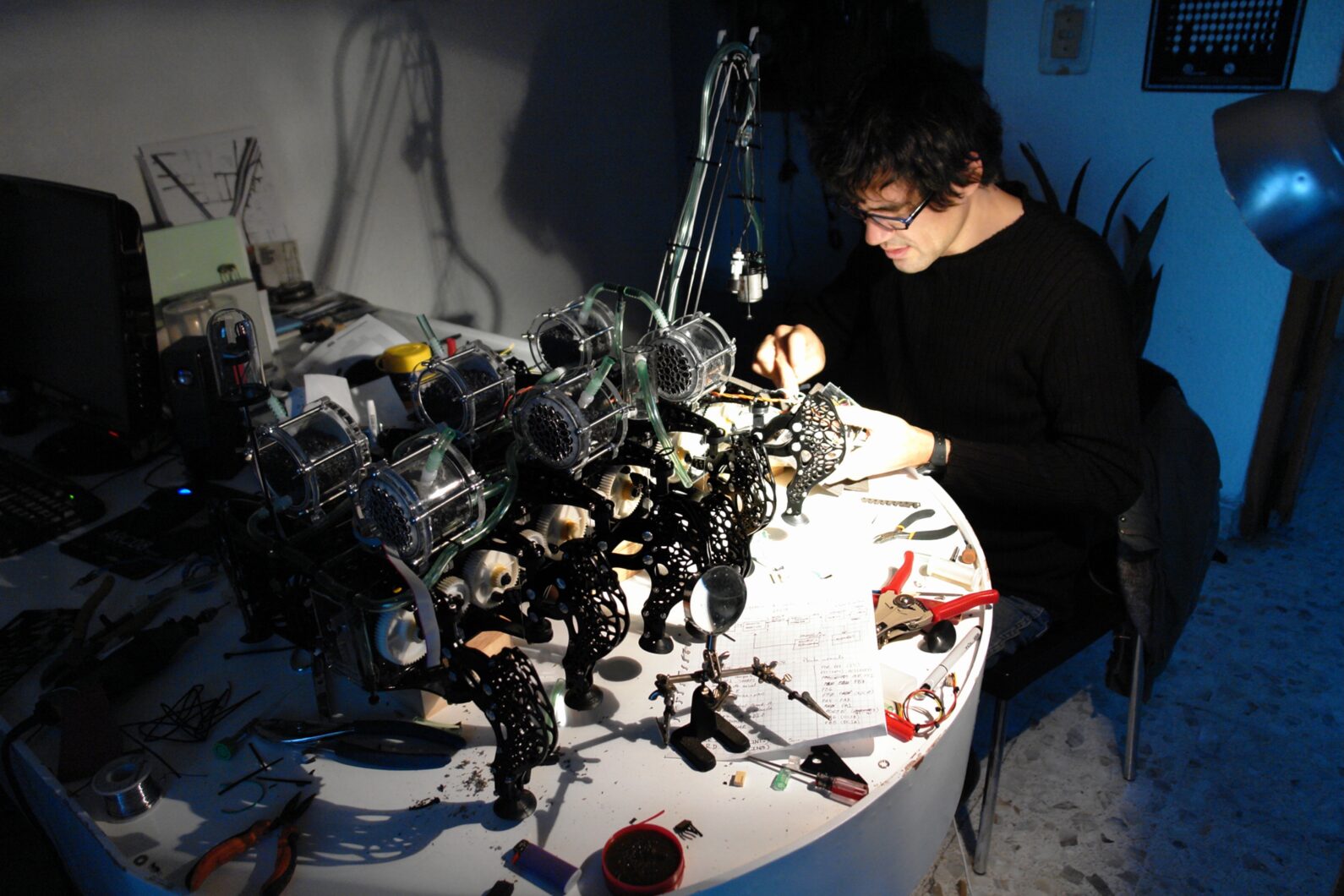 Courtesy of the artists.
Initiator(s)
Gilberto Esparza
Description
Plantas Nómadas / Nomadic Plants is a biorobotic art and research project. It is designed as a hybrid living system that combines a robot, plants, microbial fuel cells and photovoltaic elements.
The project responds to polluted environments, especially rivers affected by industrial waste and urban sewage. When the bacteria inside the system need nutrients, the robotic plant moves toward contaminated water and absorbs it. Inside its microbial cells, local bacteria break down organic waste and transform toxic substances. This process produces electricity for the robot’s circuits and batteries, while also helping to improve water quality and support the plants growing on the machine.
Rather than presenting technology as a tool for extraction, the project imagines it as a partner in ecological care. It raises questions about human impact, environmental damage and the possibility of repairing ecosystems through cooperation between machines and living organisms.
Goals
The project aims to explore how technology can support ecological repair instead of only consuming or exploiting natural resources. It creates a living robotic organism that depends on cooperation between plants, bacteria and polluted water to survive. Through this process, Plantas Nómadas shows a different relationship between machines, energy and nature. Its goal is also to encourage reflection on industrial pollution, urban waste and the responsibility to design technologies that work with ecosystems rather than against them.
Beneficial outcomes
Plantas Nómadas offers practical and educational benefits. It shows how polluted water can be used as a source of energy, while bacteria help break down organic waste and toxic substances. This process can improve water quality and support the plants that live on the robotic organism. At the same time, the project brings attention to contaminated rivers, industrial waste and urban sewage. By combining art, science and biotechnology, it invites people to imagine forms of environmental care where technology cooperates with living systems instead of exploiting them.
Location
Mexico
Users
Plants and ecosystems living in polluted waters, as well as communities and schools located near contaminated rivers. The project also involved scientists, researchers and professionals who contributed to its development and ecological research.
Maintained by
Gilberto Esparza, Segundo premio de Vida 13.0 de Fundación Telefónica, Fundación/Colección Jumex, Universidad de Guanajuato Campus Irapuato – Salamanca, Fundación Bancomer, Programa de Apoyo a la Producción e Investigación en Arte y Medios 2009, Centro Multimedia, Centro Nacional de las Artes, Fondo Nacional para la Cultura y las Artes, Laboratorio de Arte Alameda, LABoral, Centro de arte y creación industrial, Centro Párraga.
Duration
2008-2014
Category
Scientific
Pedagogical
Politics
Urban Development
Economy
Environment
Social


