
Mercado Campesino de Arusí
A collectively produced infrastructure that emerged from situated knowledge exchange, transforming local skills into economic, cultural, and spatial agency
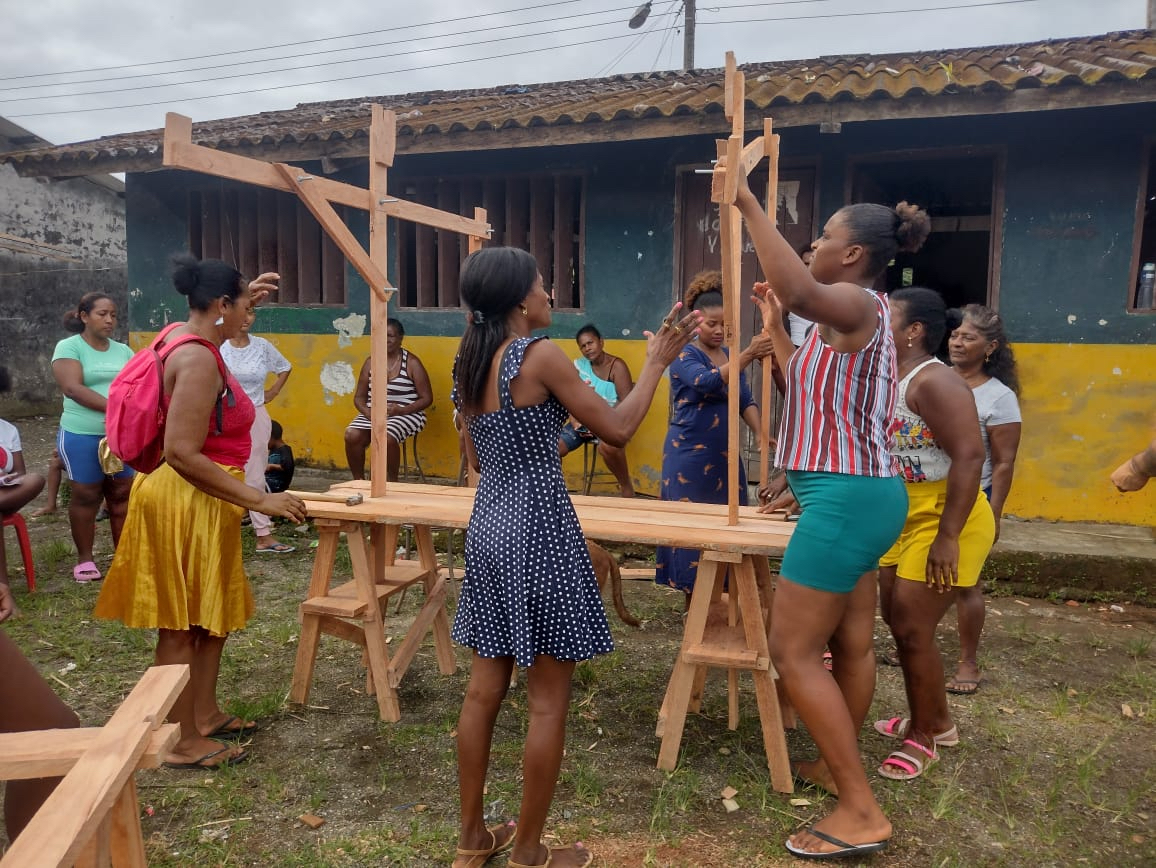 Ingrid Schild Estrada, Roberto Uribe Castro, Mercado Campesino de Arusí
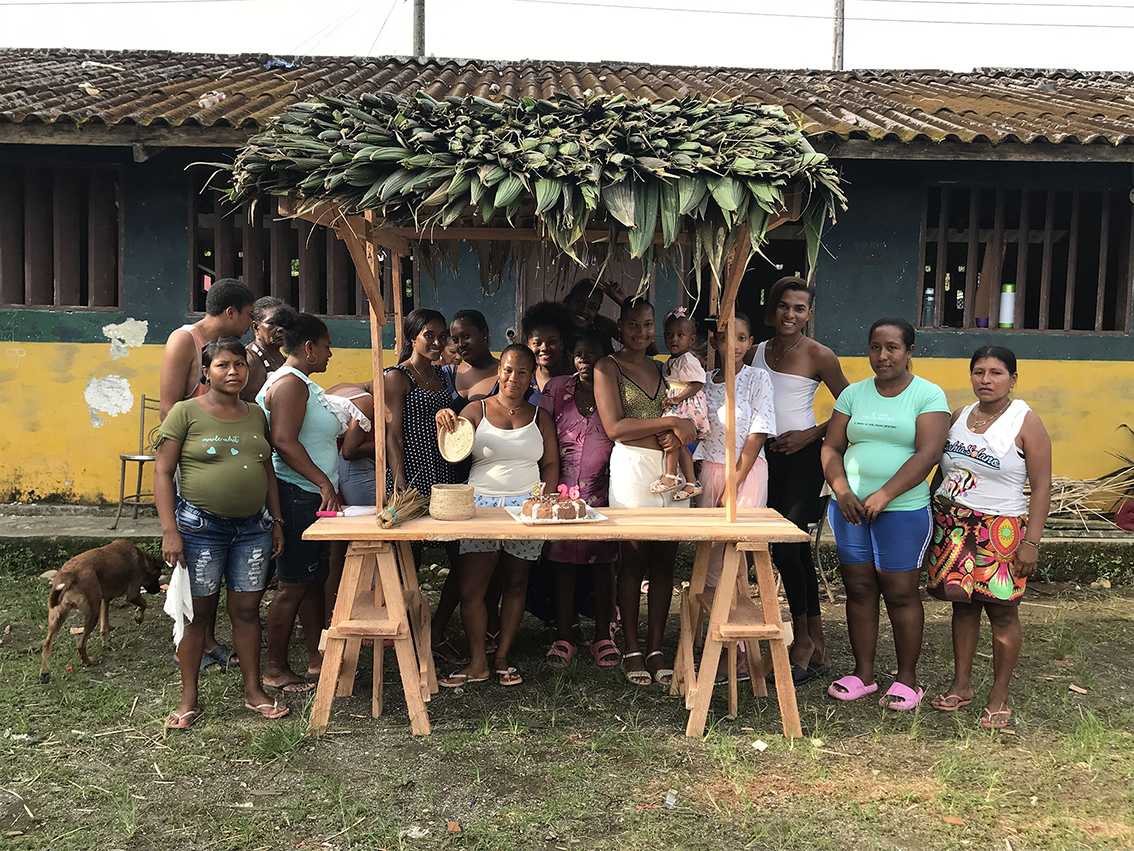 Ingrid Schild Estrada, Roberto Uribe Castro, Mercado Campesino de Arusí
Initiator(s)
Ingrid Schild Estrada, Roberto Uribe Castro
Description
Mercado Campesino emerged from a series of participatory workshops with women in Arusí, a village on Colombia’s Pacific coast. Rather than designing a predetermined outcome, the project created a framework for exchanging local knowledge and developing tools for collective action. Through workshops on woodworking, traditional construction, natural fibres, food sovereignty, agriculture, music and other local practices, participants identified resources already present within their community.
During a practical workshop, the women decided to build tables for a local farmers’ market. Six wooden tables were collectively produced, combining newly acquired woodworking skills with traditional building techniques. The market subsequently became a self-organised platform where women sold local products and activated Arusí’s basketball court—the village’s main public space—through food, music, dance and theatre. Twenty women organised five markets during 2022.
Goals
Mercado Campesino aimed to create a framework in which women from Arusí could exchange situated knowledge, develop practical skills and collectively initiate projects responding to their own interests and environment. Rather than introducing predefined solutions, the project sought to strengthen existing forms of knowledge—from woodworking and traditional construction to agriculture, food and craft—and connect them with tools for collective organisation. The goal was to enable participants to transform these resources into self-managed cultural, economic and spatial initiatives.
Beneficial outcomes
The workshops led to the creation of six wooden market tables and, more importantly, to a self-organised farmers’ market led by women from Arusí. Twenty women organised five markets in 2022, selling local products while transforming the village’s main public space into a platform for economic and cultural exchange. The process strengthened a diverse group of Afro-Colombian, Indigenous and trans women, who began developing their own initiatives and taking leadership in the community. The market provided additional income while creating a space for local knowledge, food, music, dance and theatre.
Location
Colombia
Users
Women from Arusí, particularly Afro-Colombian and Indigenous women, who collectively organise the market, sell local products and activate it as a space for cultural exchange
Maintained by
Local women’s collective in Arusí
Duration
2021 - 2022
Category
Scientific
Pedagogical
Politics
Urban Development
Economy
Environment
Social


