
Relational Citation Style
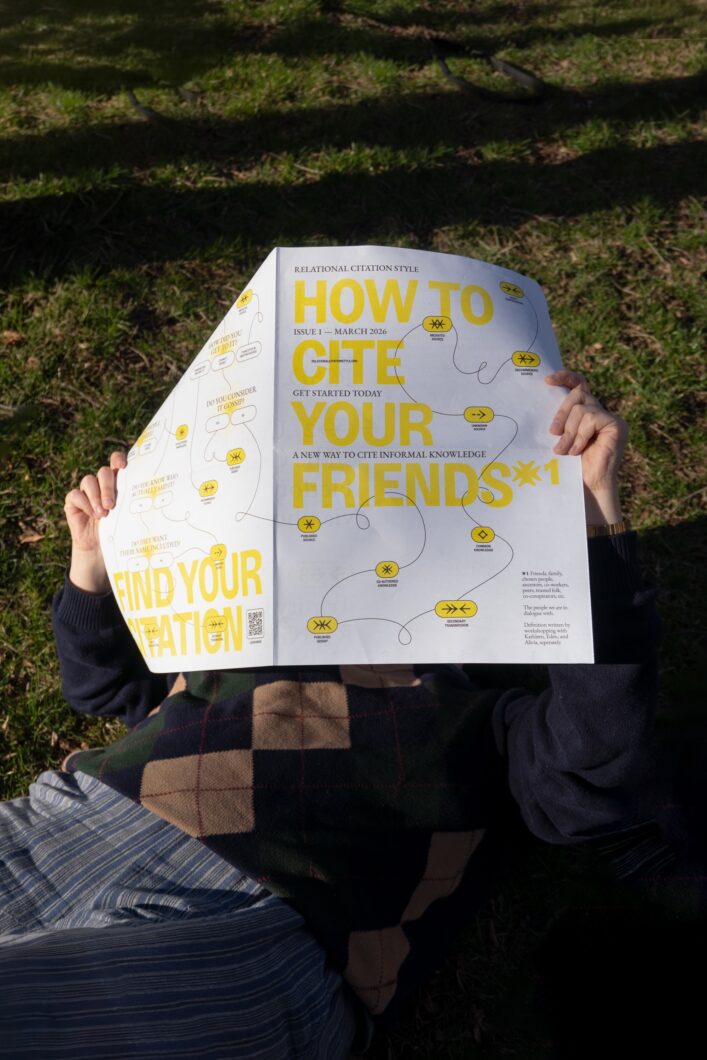
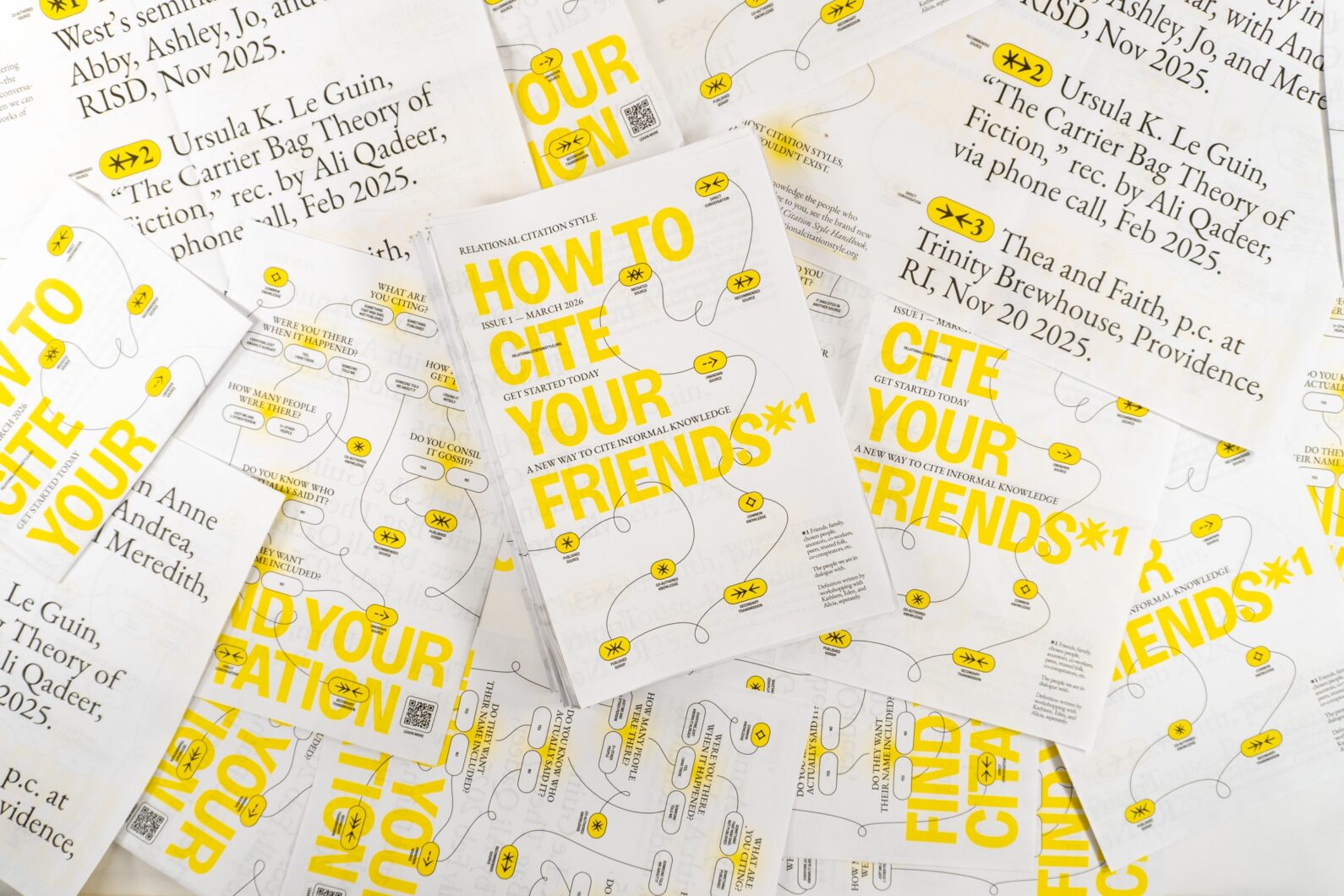
The Relational Citation Style (RCS) introduces an alternative citation framework developed around the idea that knowledge is communally generated rather than individually produced
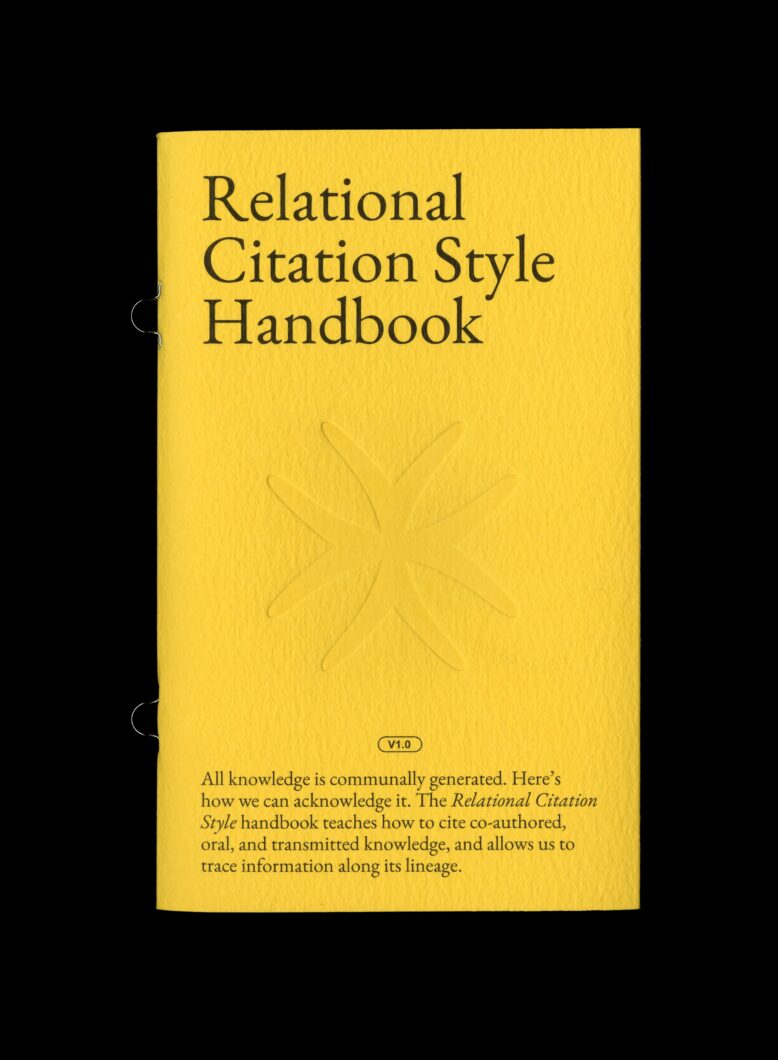 Deborah Khodanovich, Relational Citation Style Handbook
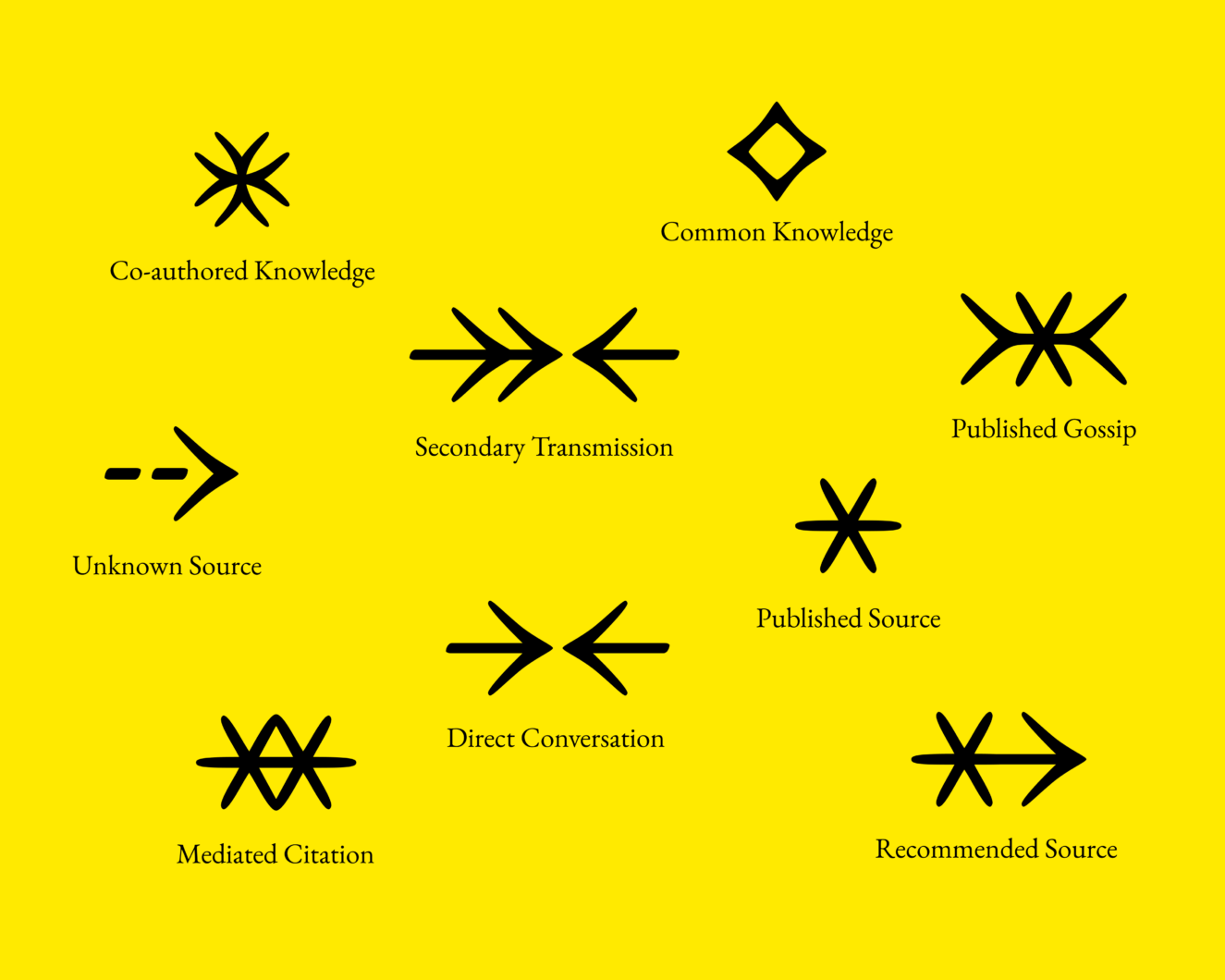 Deborah Khodanovich, Relational Citation Style
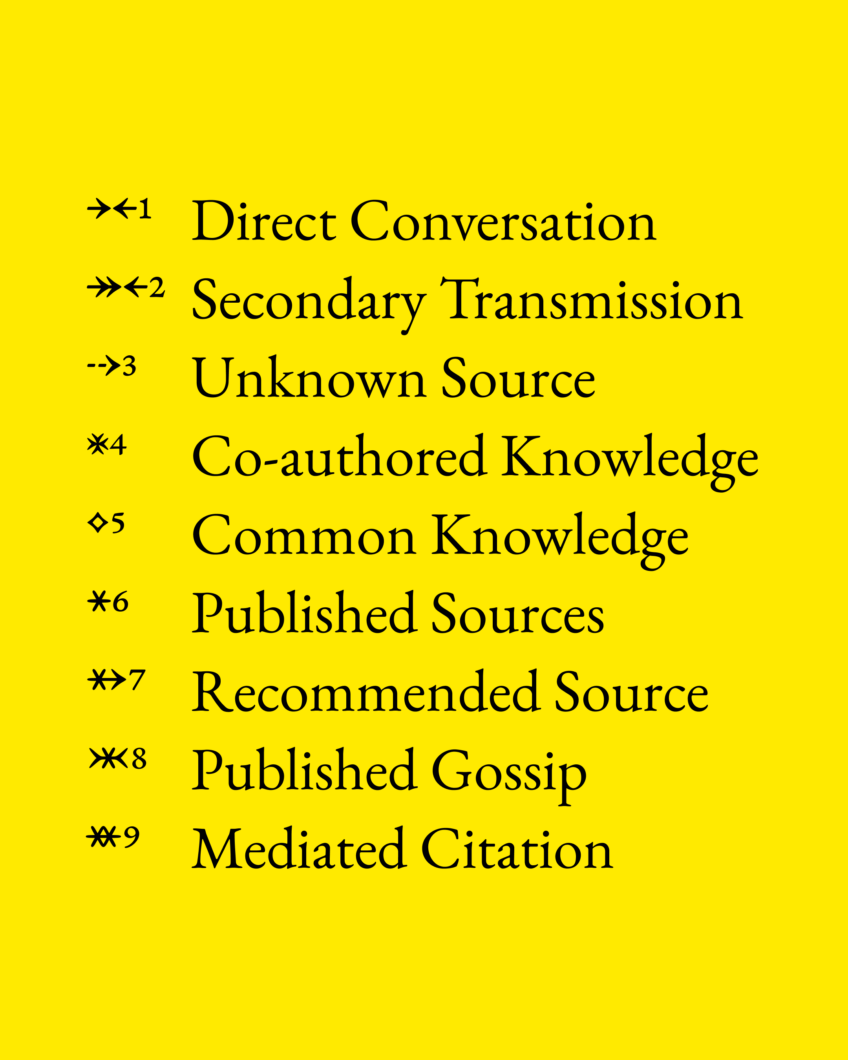 Deborah Khodanovich, Relational Citation Style
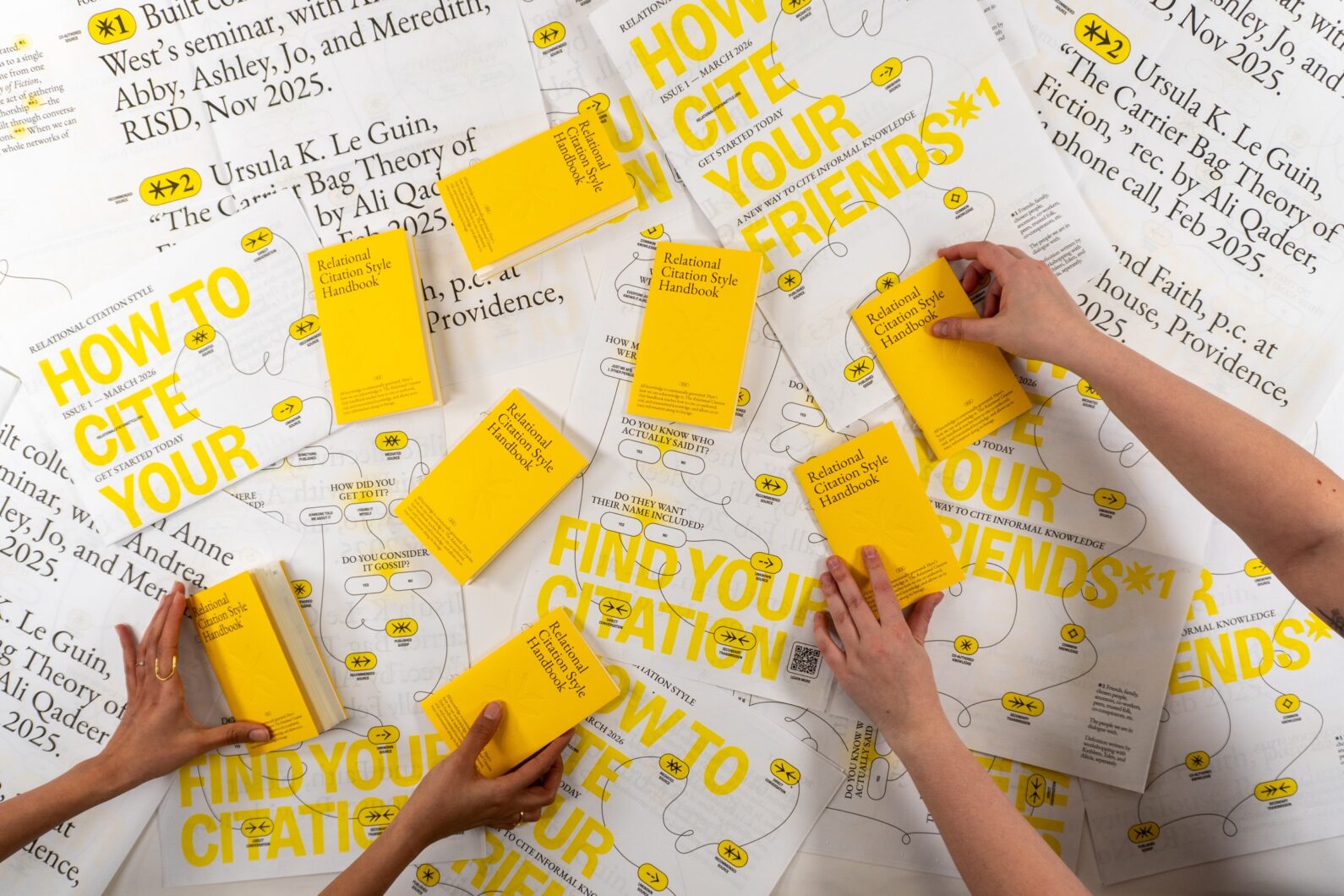 Deborah Khodanovich, Relational Citation Style Handbook
 Deborah Khodanovich, Relational Citation Style
 Deborah Khodanovich, Relational Citation Style
Initiator(s)
Deborah Khodanovich
Description
Relational Citation Style (RCS) is an alternative citation framework, proposed as an alternative to established systems such as MLA, APA and Chicago. RCS is built on the premise that knowledge is communally generated rather than individually produced. It emerged from a question of attribution in the artist’s own practice: an attempt to keep track of the conversations that shaped the work, and a discomfort with claiming anything as entirely one’s own. Working from EB Garamond, an open-source academic typeface, the artist designed custom glyphs that act as symbolic notation alongside superscript footnotes. Each glyph marks a form of knowledge that existing systems have no way to record, so it can be cited beside published and copyrighted sources and made legible within them. RCS draws on feminist and Indigenous citation practices, with an emphasis on generosity, care and the tracing of lineage, and treats oral transmission and collaborative thinking as rigorous, creditable sources.
Goals
To legitimise informal and oral knowledge within citation practices that currently exclude it, and to make the path information has travelled visible: who it passed through, where, and when. RCS aims to maintain rigorous attribution without disrupting the flow of reading, and to distinguish subjective from objective transmission within the same apparatus. The project rests on the belief that all knowledge is communally generated, and that co-created knowledge should be citable on its own terms.
Future goals: the system is being ported into additional typefaces, documented in a living web handbook, and moved toward community governance, so that it can be extended or edited by the people using it.
Beneficial outcomes
RCS is in active use. The glyph set now ships in EB Garamond on Google Fonts, so anyone can write in RCS without installing anything—including directly in shared google docs. The handbook, an edition of 500, is stocked by Draw Down Books (Boston), San Serriffe (Amsterdam), and Art Metropole (Toronto), and has been purchased by libraries at RISD, University of Toronto, and Harvard (where it is also being implemented in their pedagogy curriculum). Users have applied it across writing, teaching, and material practice. By giving oral and collaborative knowledge a citational form legible inside academic convention, RCS lets people credit sources their institutions had no way to record.
Location
United States of America
Users
Students, educators, writers, designers, librarians, anyone crediting knowledge that doesn't have a bibliographic form. Currently being implemented at Harvard Libraries (pedagogy), Rhode Island School of Design, and the University of Toronto
Maintained by
Currently (2026) maintained by the initiator. Author & Designer: Deborah Khodanovich; Type Design Support: Kelsey Elder; Citation Support: Anne West, Meredith Barrett; Project Support: Anther Kiley, Kathleen Sleboda, Christopher Sleboda, Bethany Johns; Design Support: Thea Kim, Faith Kim, Ali S. Qadeer; Print Production Support: Jianzhen Joe Qiao
Duration
2024 - ongoing
Category
Scientific
Pedagogical
Politics
Urban Development
Economy
Environment
Social
Links
https://dvorit.ca/relational-citation-st...
https://relationalcitationstyle.org/
https://relationalcitationstyle.substack...
https://draw-down.com/products/relationa...
https://digitalcommons.risd.edu/masterst...


