
Rural School of Economics
A trans-local and inter-rural travelling school, connecting knowledge and learning across rural communities and organisations in Europe
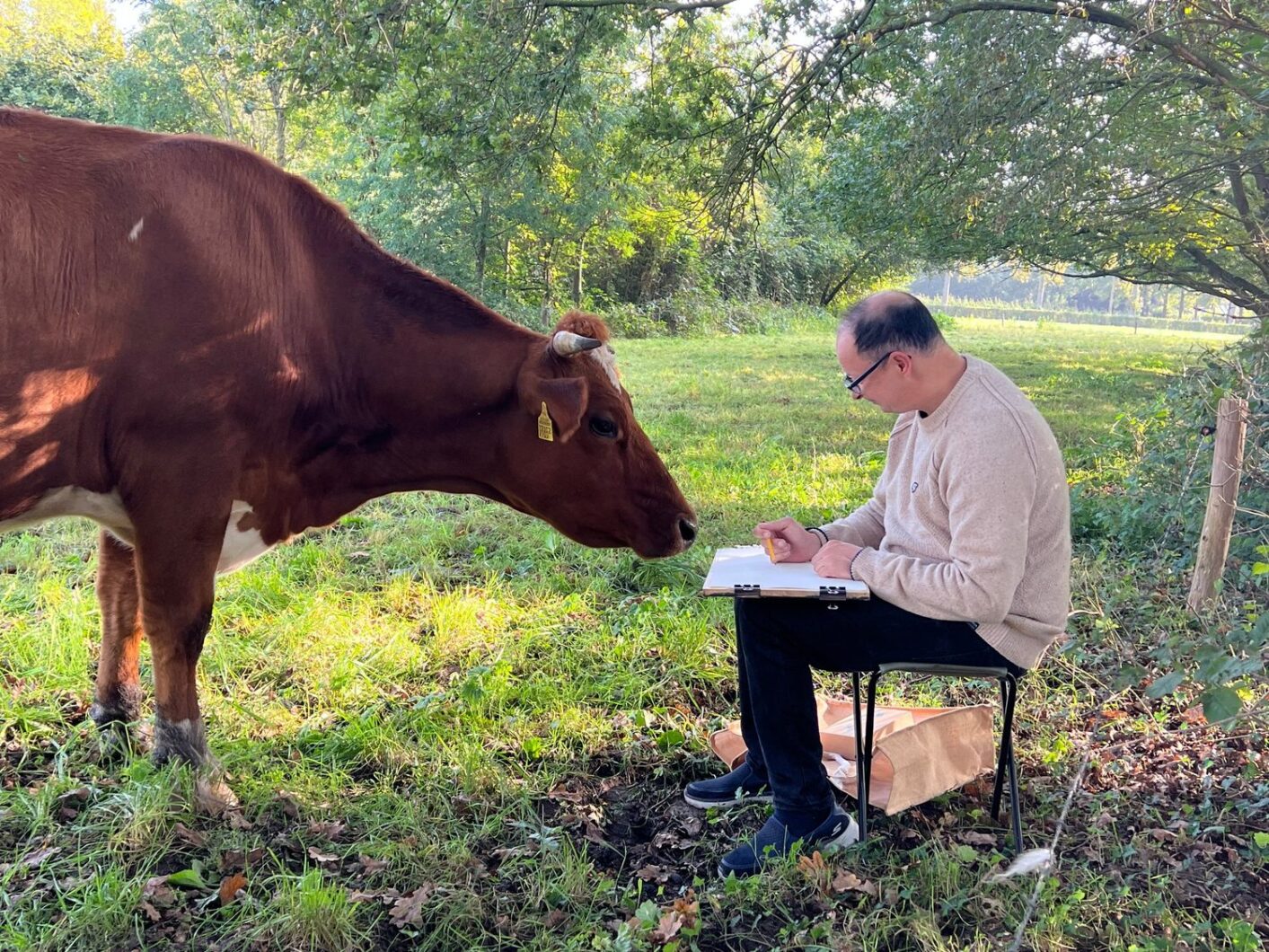 Cow and Landscape, Wapke Feenstra in partnership with Van Abbemuseum, 2024. Photo Inge Borsje
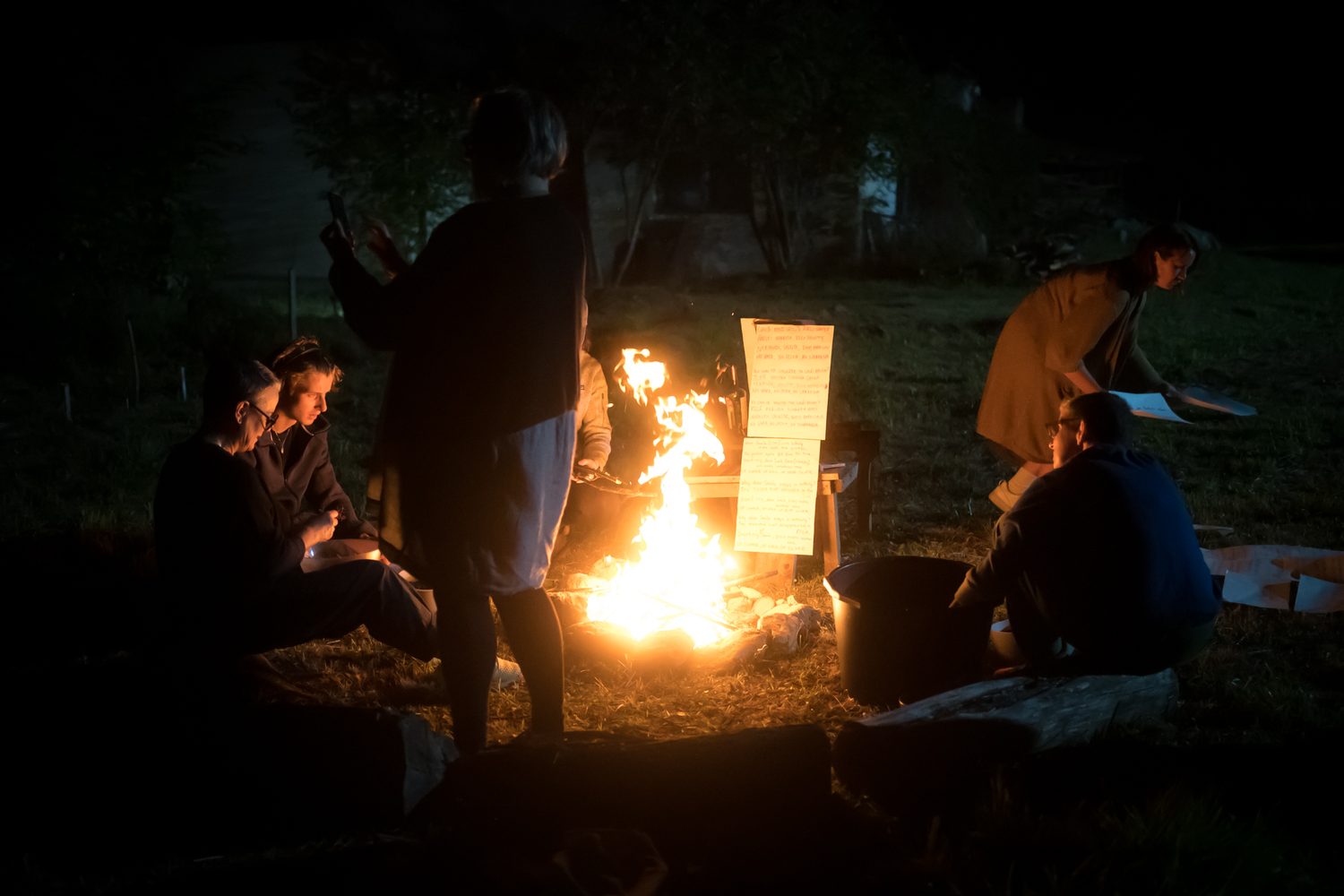 Singing to Nature, Rural School of Economics, Terrra, Brezoi, Romania, August 2025
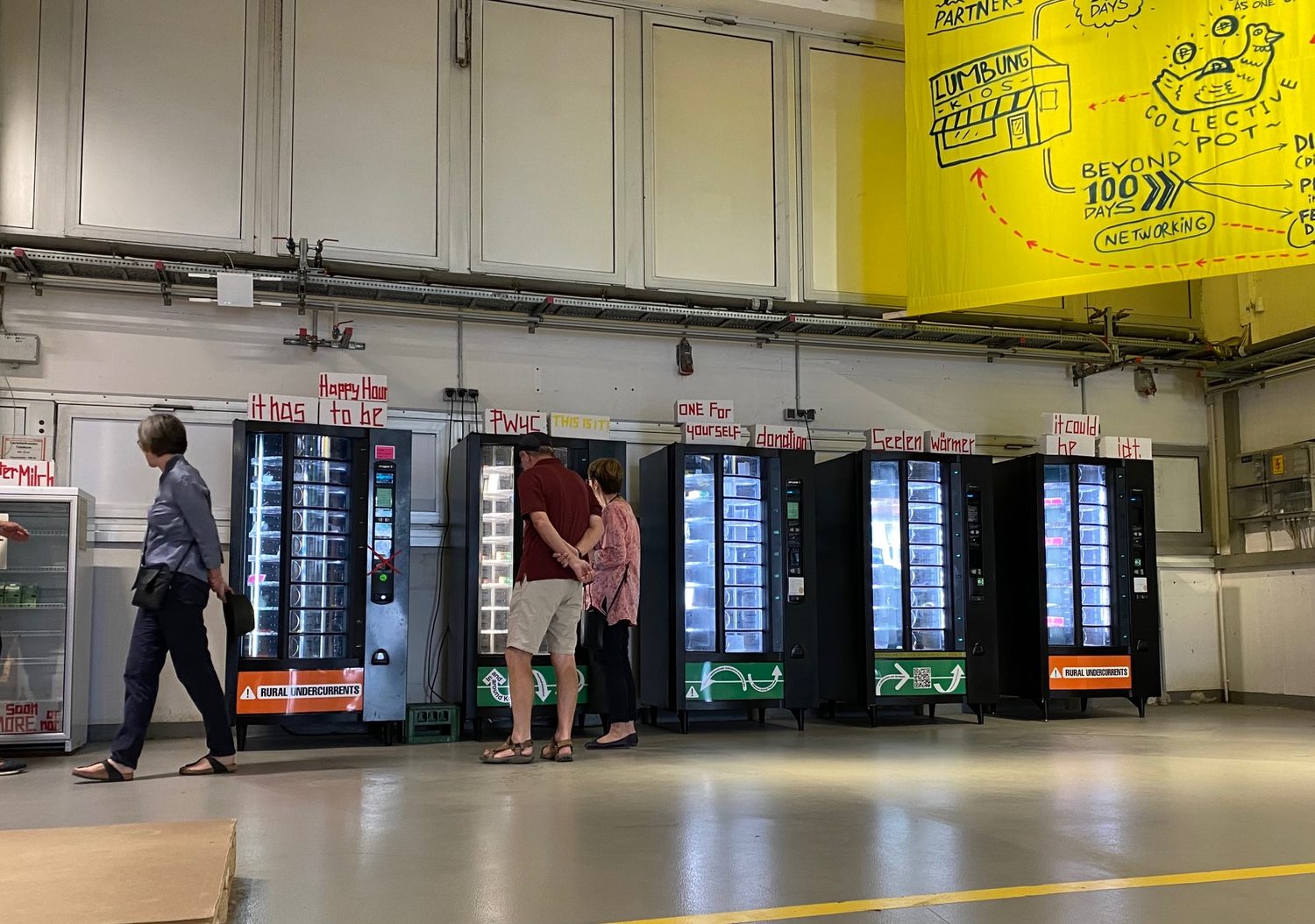 Kassel’s Rural Undercurrents, Rural Undercurrents Vending Machines, Lumbung documenta fifteen, 2022
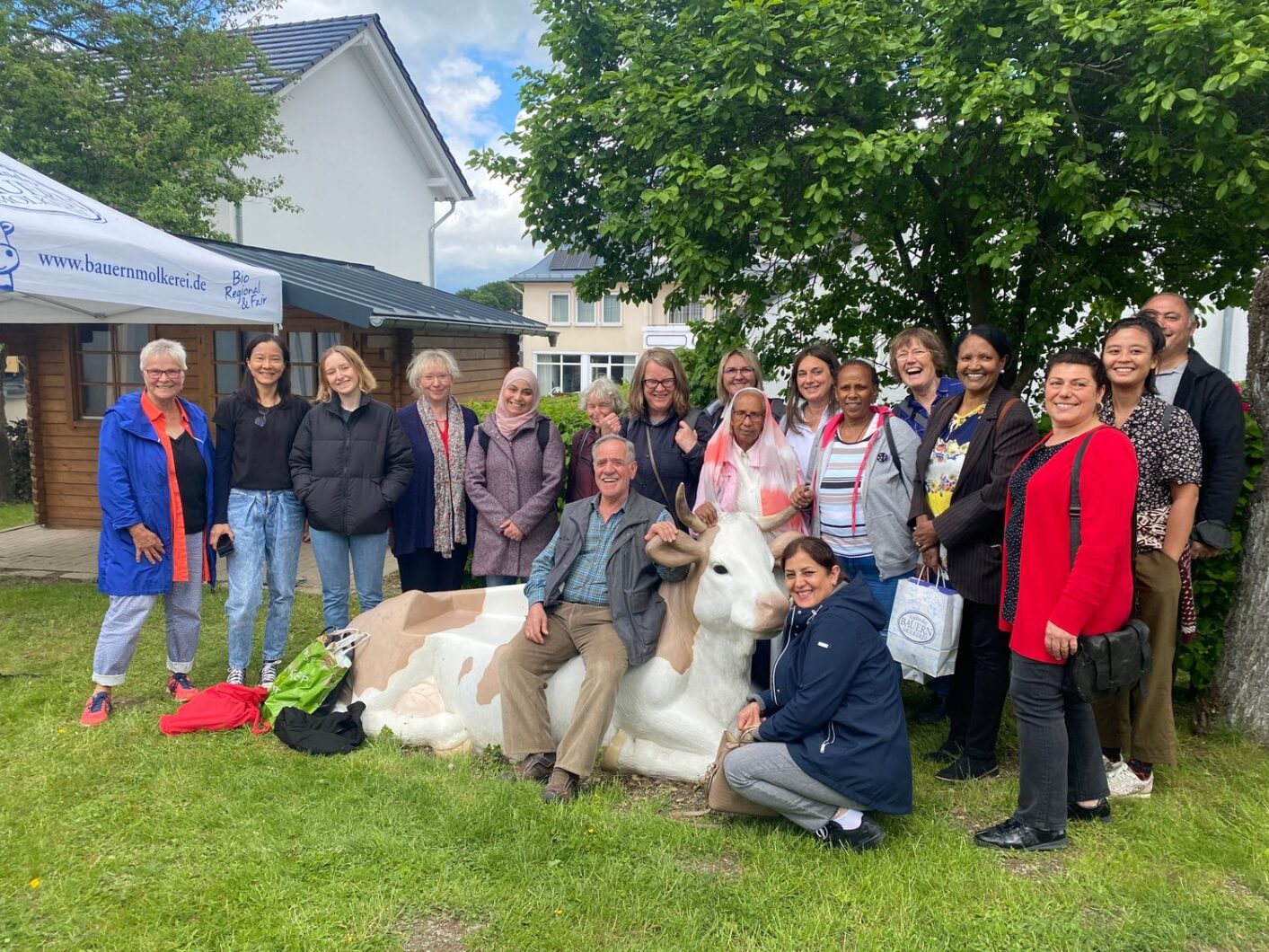 Kassel’s Rural Undercurrents, Dairy Trip with Frauentreff Brückenhof, Lumbung documenta fifteen, 2022
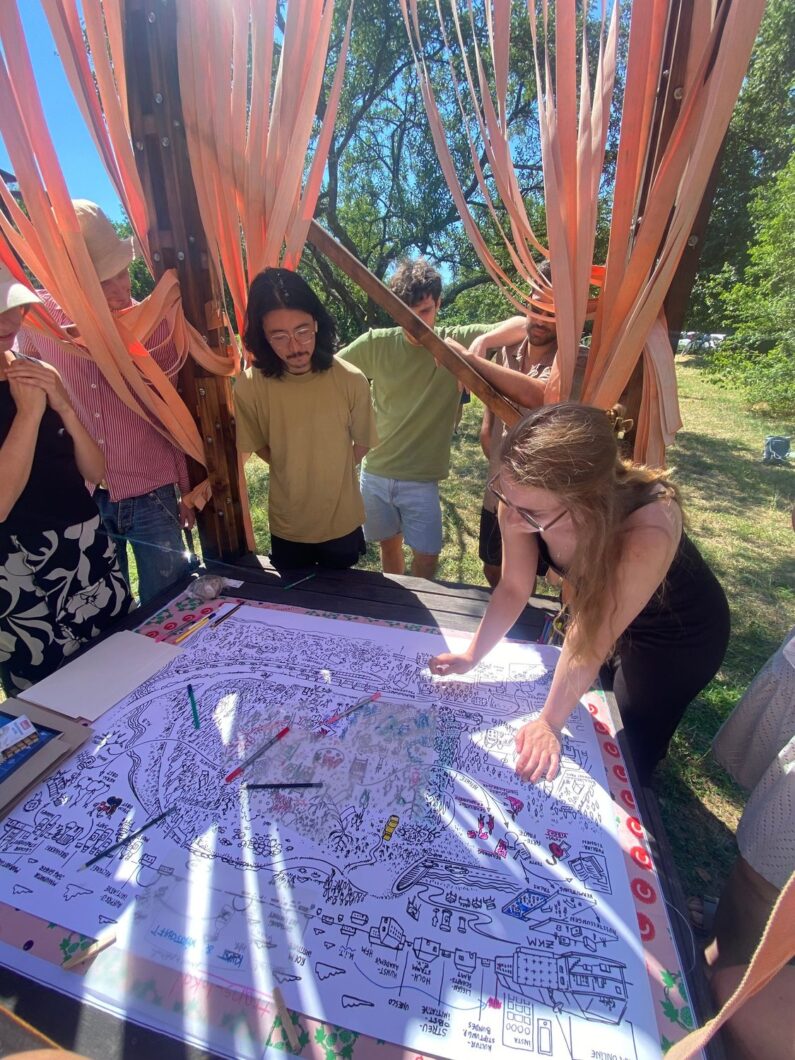 Rural Undercurrent Seminar, with students HfG Karlsruhe, Alanus University and Fabian Faylona, Katzenwedelwiese, July 2026
Initiator(s)
Kathrin Böhm, Wapke Feenstra
Description
The Rural School of Economics is a collaborative infrastructure for learning, set up by Myvillages. The travelling school connects local knowledge and shares transformative learning across rural communities and organisations in Europe. The school moves between rural places, everyday spaces and art spaces, formal and informal settings. The school arrives in each place at the invitation of someone local and it makes space for recognising contemporary rural cultures and local abilities to connect with the non-human. It does this by walking, handling, touching, drawing, editing, cooking, eating, showing and listening. Classes happen where rural culture and economies are made: in small businesses, in kitchens, in fields, in streets and in community halls. It currently exists across a network of villages, rural communities and interest groups in seven European places. In each place, the school is organised anew, based on what collaborators and partners want to cover. The Rural School of Economics is multilingual, intergenerational and trans-local. It connects communities who might be far apart, but who are working on similar issues. Everyone involved is both a learner and a teacher. It’s powered by mutual knowledge exchange, cultural co-production and everyday economies.
Goals
The Rural School of Economics is an extension of Myvillages’ ongoing work to acknowledge and share rural knowledge. The goals are:
To pay attention and acknowledge the rural: the school understands “the rural” as a place, a mindset, a memory and a trans-local territory; the rural is not geographically defined, and we recognise it as a concept that derives from a European tendency to divide and create binaries in order to manage and rule, such as urban – rural. There is no need nor intention to define the rural.
Learning as commoning: the school is considered as a place for commoning through learning. A school is a communal space for sharing knowledge, and the Rural School of Economics makes space for less-recognised and undervalued types of knowledge.
To claim the economy as ecological and everyday practice: Economy is an everyday activity practised by all of us. The school is making visible different ways of living, working and sustaining that emerge and exist in rural communities. The school focuses on land-based and women-led economies, and wants to contribute towards a solidarity
economy that cares for people and the planet.
Beneficial outcomes
Acknowledging, nurturing and commoning local knowledge; creating and maintaining trans-local and inter-rural relationships; growing an inter-rural cultural space with many stakeholders, including artists and cultural workers; supporting artists to approach their rural backgrounds and villages as a context and place for their practice; publishing and promoting economic practices connected to the land and the more-than-human.
Location
The Netherlands, translocal
Users
Artists, cultural workers and organisers, residents of rural communities, community activists, researchers
Maintained by
Currently (2026) by Kathrin Böhm, Wapke Feenstra, Indra Gleizde, Alina Dzeravianka, Inez Dekker, Emma Laurens
Duration
2020 - ongoing
Category
Scientific
Pedagogical
Politics
Urban Development
Economy
Environment
Social


